
Climate change is one of the biggest challenges facing agriculture today. Across Africa and other developing regions, smallholder farmers are experiencing unpredictable rainfall patterns, prolonged droughts, floods, soil degradation, pest outbreaks, and declining crop yields. These challenges threaten food security, livelihoods, and rural economies.
To address these growing concerns, experts and development organizations are promoting Climate-Smart Agriculture (CSA)—an approach that helps farmers produce more food sustainably while adapting to climate change and reducing environmental impacts.
This guide explains what Climate-Smart Agriculture is, why it matters, and how smallholder farmers can adopt climate-smart practices to build resilience and improve productivity.
Understanding Climate-Smart Agriculture
Climate-Smart Agriculture (CSA) is an agricultural approach that aims to achieve three key objectives:
1. Increase Agricultural Productivity
CSA helps farmers grow more crops and improve livestock production while using resources efficiently.
2. Build Resilience to Climate Change
Farmers learn techniques that help them withstand droughts, floods, extreme temperatures, and changing weather patterns.
3. Reduce Greenhouse Gas Emissions
CSA promotes environmentally friendly farming methods that reduce emissions and protect ecosystems.
In simple terms, Climate-Smart Agriculture helps farmers produce more, adapt better, and protect the environment.
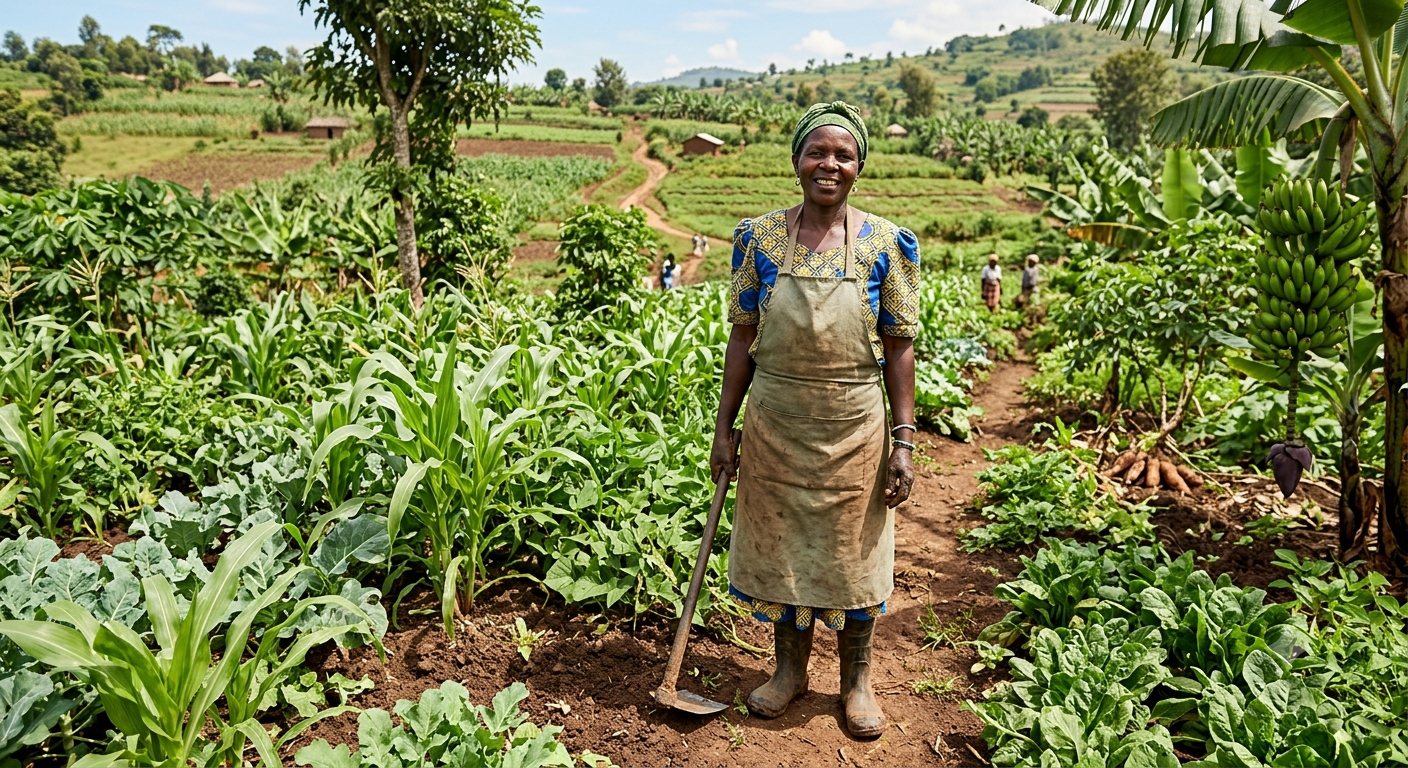
Image Prompt 1
Prompt:
“A realistic African smallholder farmer standing in a healthy green farm, surrounded by diverse crops, using sustainable farming practices. Bright natural lighting, rural African landscape, climate-resilient agriculture, professional documentary photography style, high resolution.”
Why Climate-Smart Agriculture Matters
Agriculture depends heavily on weather and natural resources. Unfortunately, climate change is making farming increasingly difficult.
Many farmers now face:
- Irregular rainfall seasons
- Increased drought frequency
- Flooding and soil erosion
- Rising temperatures
- Crop diseases and pest infestations
- Reduced crop yields
Without adaptation measures, these impacts can lead to food shortages, income loss, and increased poverty.
Climate-Smart Agriculture provides practical solutions that help communities continue producing food despite climate challenges.
Key Climate-Smart Agriculture Practices
Conservation Agriculture
Conservation agriculture focuses on improving soil health while reducing land degradation.
Key practices include:
- Minimal soil disturbance
- Crop residue retention
- Crop rotation
- Cover cropping
Benefits:
- Improved soil fertility
- Better moisture retention
- Reduced erosion
- Increased yields over time
Agroforestry
Agroforestry combines trees with crops or livestock systems.
Examples include:
- Planting fruit trees on farms
- Integrating nitrogen-fixing trees
- Establishing windbreaks
Benefits:
- Improved soil quality
- Increased biodiversity
- Additional income from tree products
- Carbon sequestration
Image Prompt 2
Prompt:
“A vibrant agroforestry farm in Africa featuring crops growing alongside fruit and shade trees. Farmers working in the field, healthy vegetation, sustainable agriculture, climate adaptation, aerial drone photography, realistic and detailed.”
Water-Smart Farming Techniques
Efficient water management is essential as rainfall patterns become less predictable.
Climate-smart water practices include:
- Rainwater harvesting
- Drip irrigation systems
- Mulching
- Water storage facilities
- Small-scale irrigation schemes
Benefits:
- Reduced water waste
- Improved crop survival during droughts
- Increased productivity
Climate-Resilient Crop Varieties
Farmers can improve resilience by planting crop varieties that tolerate:
- Drought
- Heat stress
- Flooding
- Disease outbreaks
Examples include improved varieties of:
- Maize
- Rice
- Sorghum
- Millet
- Cassava
These crops can better withstand climate shocks and maintain production levels.
Integrated Pest Management (IPM)
Climate change often increases pest and disease outbreaks.
Integrated Pest Management combines:
- Biological control methods
- Natural predators
- Crop rotation
- Improved monitoring systems
- Limited and targeted pesticide use
Benefits:
- Reduced chemical dependence
- Lower production costs
- Improved environmental protection
Benefits of Climate-Smart Agriculture for Smallholder Farmers
Improved Food Security
Higher and more stable crop yields help families access sufficient and nutritious food throughout the year.
Increased Household Income
Diversified farming systems create multiple sources of income from crops, livestock, fruits, and tree products.
Better Soil Health
Sustainable land management practices improve soil fertility and productivity over time.
Reduced Climate Risks
Climate-smart techniques help farmers withstand droughts, floods, and other weather-related shocks.
Environmental Protection
CSA supports biodiversity conservation, reduces land degradation, and helps mitigate climate change impacts.
Image Prompt 3
Prompt:
“A successful African farming family harvesting abundant crops from a climate-smart farm. Smiling farmers, healthy soil, diverse crops, sustainable agriculture, golden sunlight, inspirational rural development photography.”
Challenges to Climate-Smart Agriculture Adoption
Despite its benefits, several barriers limit adoption among smallholder farmers:
Limited Access to Information
Many farmers lack awareness of climate-smart technologies and practices.
Financial Constraints
The cost of improved seeds, irrigation equipment, and farming technologies can be prohibitive.
Inadequate Extension Services
Many rural communities have limited access to agricultural extension officers and technical support.
Land Tenure Issues
Unclear land ownership can discourage long-term investments in sustainable land management.
Addressing these challenges requires support from governments, NGOs, development partners, and the private sector.
The Role of NGOs in Promoting Climate-Smart Agriculture
Non-governmental organizations play a critical role in helping farmers transition to climate-smart practices.
NGOs support communities through:
- Farmer training and capacity building
- Demonstration farms
- Climate information services
- Access to improved seeds
- Water management projects
- Sustainable land restoration initiatives
- Women’s empowerment programs
- Youth engagement in agriculture
By strengthening local capacity, NGOs help communities build resilience and achieve sustainable agricultural development.
Image Prompt 4
Prompt:
“NGO agricultural extension officer training African farmers in a rural community demonstration farm. Farmers gathered around learning sustainable farming techniques, educational workshop setting, realistic documentary photography.”
How Farmers Can Get Started with Climate-Smart Agriculture
Smallholder farmers can begin their climate-smart journey by taking simple steps:
- Assess climate risks affecting their farms.
- Improve soil health through mulching and composting.
- Diversify crops and farming activities.
- Plant climate-resilient crop varieties.
- Adopt efficient water management practices.
- Integrate trees into farming systems.
- Seek agricultural training and extension support.
- Join farmer groups and cooperatives for knowledge sharing.
Even small changes can significantly improve resilience and productivity over time.
Conclusion
Climate change is transforming agriculture, but farmers are not powerless. Climate-Smart Agriculture offers practical, sustainable solutions that help smallholder farmers increase productivity, adapt to changing weather conditions, and protect the environment.
By embracing climate-smart practices and strengthening partnerships between communities, NGOs, governments, and development organizations, we can build resilient food systems that support livelihoods and ensure food security for future generations.
The future of agriculture depends on our ability to farm smarter, protect natural resources, and empower farming communities to thrive in a changing climate.
Together, we can cultivate resilience and create a more sustainable future for Africa.
