
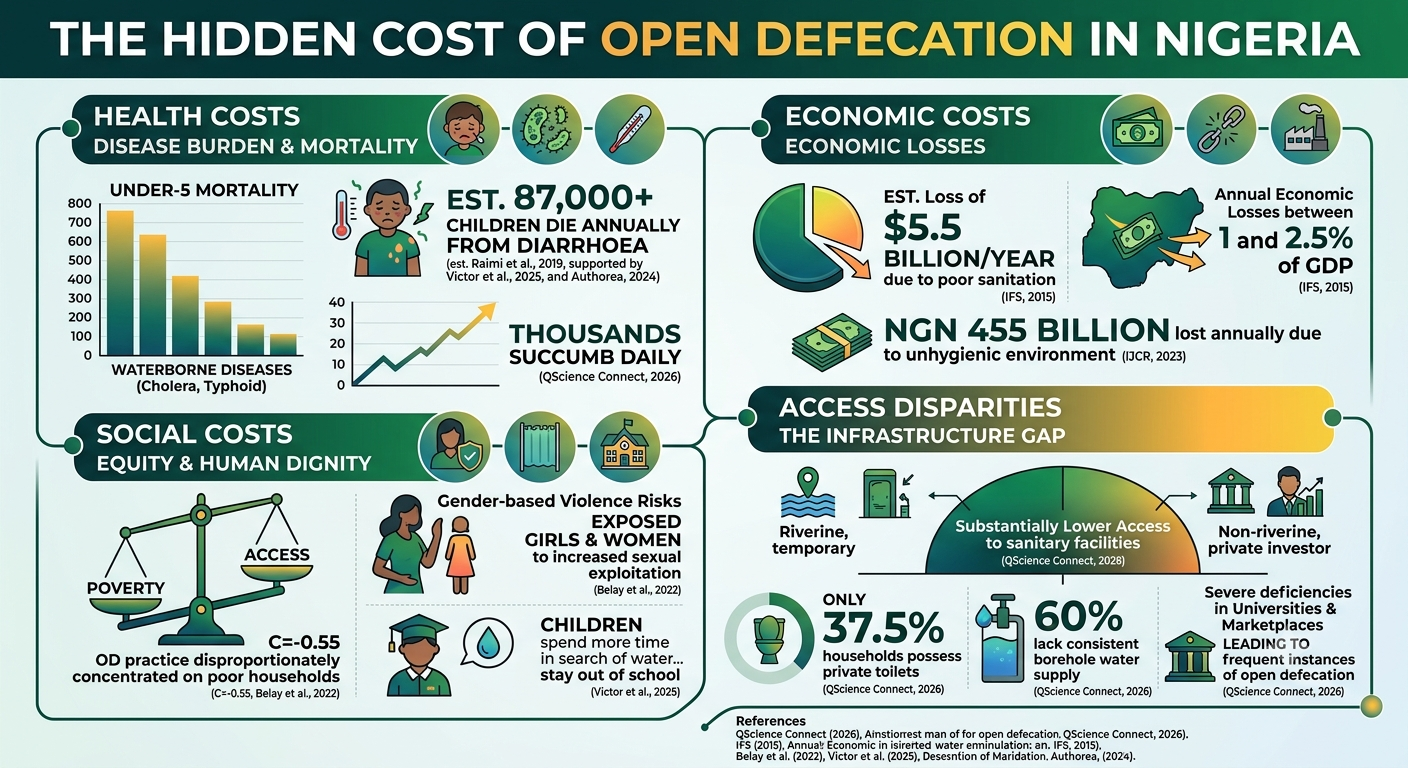
Open defecation remains one of Nigeria’s most pressing public health and environmental challenges. While often viewed primarily as a sanitation issue, its impacts extend far beyond hygiene. Open defecation affects public health, contaminates water resources, damages ecosystems, undermines economic development, and increases vulnerability to climate-related disasters.
Despite ongoing efforts by governments, development partners, and civil society organizations, millions of Nigerians still lack access to safe and dignified sanitation facilities. As a result, communities continue to bear the hidden costs of poor sanitation practices.
Ending open defecation is not only a public health necessity. it is also essential for environmental protection, climate resilience, sustainable development, and human dignity.
What Is Open Defecation?
Open defecation refers to the practice of defecating in open spaces such as:
- Bushes
- Fields
- Forests
- Rivers and streams
- Beaches
- Roadside areas
- Open plots of land
This practice typically occurs where households lack access to safe, affordable, and functional toilet facilities.
While open defecation is often linked to poverty and inadequate infrastructure, it can also result from cultural norms, limited awareness, and weak sanitation systems.
Image Prompt 1
Prompt:
“Rural Nigerian community with a focus on sanitation challenges, showing the contrast between areas with proper sanitation facilities and areas lacking infrastructure. Educational documentary photography, realistic, respectful representation, environmental health theme.”
The Public Health Cost of Open Defecation
One of the most immediate consequences of open defecation is the spread of disease.
Human waste contains harmful pathogens that contaminate the environment and increase exposure to infections.
Common Diseases Linked to Poor Sanitation
- Cholera
- Diarrhea
- Typhoid fever
- Dysentery
- Hepatitis A
- Intestinal worm infections
Children are particularly vulnerable.
Frequent diarrheal diseases contribute to:
- Malnutrition
- Stunted growth
- Poor school attendance
- Increased child mortality
When sanitation systems fail, communities face recurring outbreaks that place significant pressure on healthcare systems.
Water Contamination and Environmental Degradation
Open defecation often leads to contamination of surface and groundwater sources.
During rainfall events, human waste is washed into:
- Rivers
- Streams
- Wells
- Boreholes
- Wetlands
This contamination reduces water quality and creates serious health risks for communities that rely on these sources for drinking, cooking, and household use.
Environmental Consequences Include:
- Pollution of freshwater ecosystems
- Reduced biodiversity
- Soil contamination
- Degradation of aquatic habitats
- Increased nutrient loading in water bodies
The environmental impacts can persist long after contamination occurs.
Image Prompt 2
Prompt:
“Clean river beside a rural Nigerian community contrasted with environmental conservation efforts protecting water sources from contamination. Community members collecting clean water, environmental sustainability theme, realistic NGO impact photography.”
The Link Between Open Defecation and Climate Change
Sanitation and climate change are more closely connected than many people realize.
Climate change is increasing the frequency and intensity of:
- Flooding
- Heavy rainfall events
- Stormwater runoff
- Water scarcity
In communities practicing open defecation, floods can spread human waste across large areas, contaminating homes, farms, schools, and water sources.
Climate-Related Risks Include:
- Increased disease outbreaks after flooding
- Greater contamination of water supplies
- Damage to sanitation infrastructure
- Increased vulnerability of low-income communities
Building climate-resilient sanitation systems is therefore a crucial component of climate adaptation strategies.
The Economic Cost of Poor Sanitation
Open defecation imposes significant economic burdens on households and communities.
Healthcare Expenses
Families often spend substantial amounts treating preventable sanitation-related illnesses.
Loss of Productivity
Illness reduces people’s ability to:
- Work
- Farm
- Attend school
- Operate businesses
Reduced Educational Outcomes
Children suffering from repeated infections are more likely to miss school and perform poorly academically.
Community Development Losses
Poor sanitation can discourage investment, tourism, and economic growth.
When multiplied across millions of people, the economic impact becomes enormous.
Image Prompt 3
Prompt:
“Healthy rural Nigerian family benefiting from improved sanitation facilities, children attending school, parents working productively, positive community development scene, bright and hopeful documentary photography.”
The Impact on Women and Girls
Women and girls often experience the greatest burden of inadequate sanitation.
Without safe toilet facilities, many face:
- Privacy concerns
- Safety risks
- Reduced dignity
- Health complications
- School absenteeism during menstruation
Access to safe sanitation empowers women and girls by improving health outcomes, educational opportunities, and personal security.
Why Gender Matters
Improved sanitation contributes directly to:
- Gender equality
- Women’s empowerment
- Educational attainment
- Community well-being
No community can achieve sustainable development while women and girls lack access to safe sanitation.
Open Defecation and Community Dignity
Sanitation is about more than infrastructure—it is about human dignity.
Every person deserves access to:
- Safe sanitation facilities
- Clean water
- Healthy living conditions
- Privacy and security
Communities that achieve open defecation-free status often experience increased pride, stronger social cohesion, and improved quality of life.
Solutions That Work
Ending open defecation requires a combination of infrastructure, education, community engagement, and policy support.
Community-Led Total Sanitation (CLTS)
CLTS empowers communities to recognize sanitation challenges and take collective action to eliminate open defecation.
Improved Toilet Construction
Affordable and climate-resilient toilets can provide safe sanitation in both rural and urban communities.
Hygiene Education
Awareness campaigns help communities understand the health and environmental consequences of poor sanitation.
Access to Clean Water
Safe sanitation and clean water must go hand in hand to achieve lasting results.
Government and NGO Partnerships
Collaboration among stakeholders is essential for scaling sanitation solutions and reaching underserved populations.
Image Prompt 4
Prompt:
“Community members in rural Nigeria participating in a sanitation awareness program and constructing improved household toilets. NGO-led development project, teamwork, sustainability, realistic community empowerment photography.”
The Role of NGOs in Ending Open Defecation
Non-governmental organizations play a vital role in promoting sanitation and hygiene across Nigeria.
NGOs contribute by:
- Building sanitation infrastructure
- Conducting hygiene education campaigns
- Supporting behavior change initiatives
- Promoting climate-resilient sanitation systems
- Training community health volunteers
- Advocating for sanitation policy improvements
- Supporting vulnerable and underserved communities
Through community-driven approaches, NGOs help create sustainable solutions that improve health, protect the environment, and strengthen resilience.
A Path Toward Open Defecation-Free Communities
Achieving an open defecation-free Nigeria requires collective action from:
- Government institutions
- Community leaders
- Civil society organizations
- Development partners
- Schools
- Religious institutions
- Households
Every toilet built, every hygiene lesson delivered, and every community mobilized brings Nigeria closer to a healthier and more sustainable future.
Image Prompt 5
Prompt:
“Modern sanitation facilities in a rural Nigerian community with smiling residents, clean environment, healthy children, sustainable development success story, climate-resilient infrastructure, professional NGO impact photography.”
Conclusion
The hidden cost of open defecation extends far beyond sanitation. It affects public health, environmental sustainability, climate resilience, economic productivity, education, and human dignity.
Ending open defecation is one of the most effective investments communities can make toward improving quality of life and achieving sustainable development goals.
By strengthening sanitation infrastructure, promoting hygiene education, protecting water resources, and empowering communities to adopt safe sanitation practices, Nigeria can create healthier, more resilient, and more prosperous communities for generations to come.
The journey toward an open defecation-free Nigeria is not just about building toilets—it is about protecting lives, preserving the environment, and ensuring a dignified future for all.
