
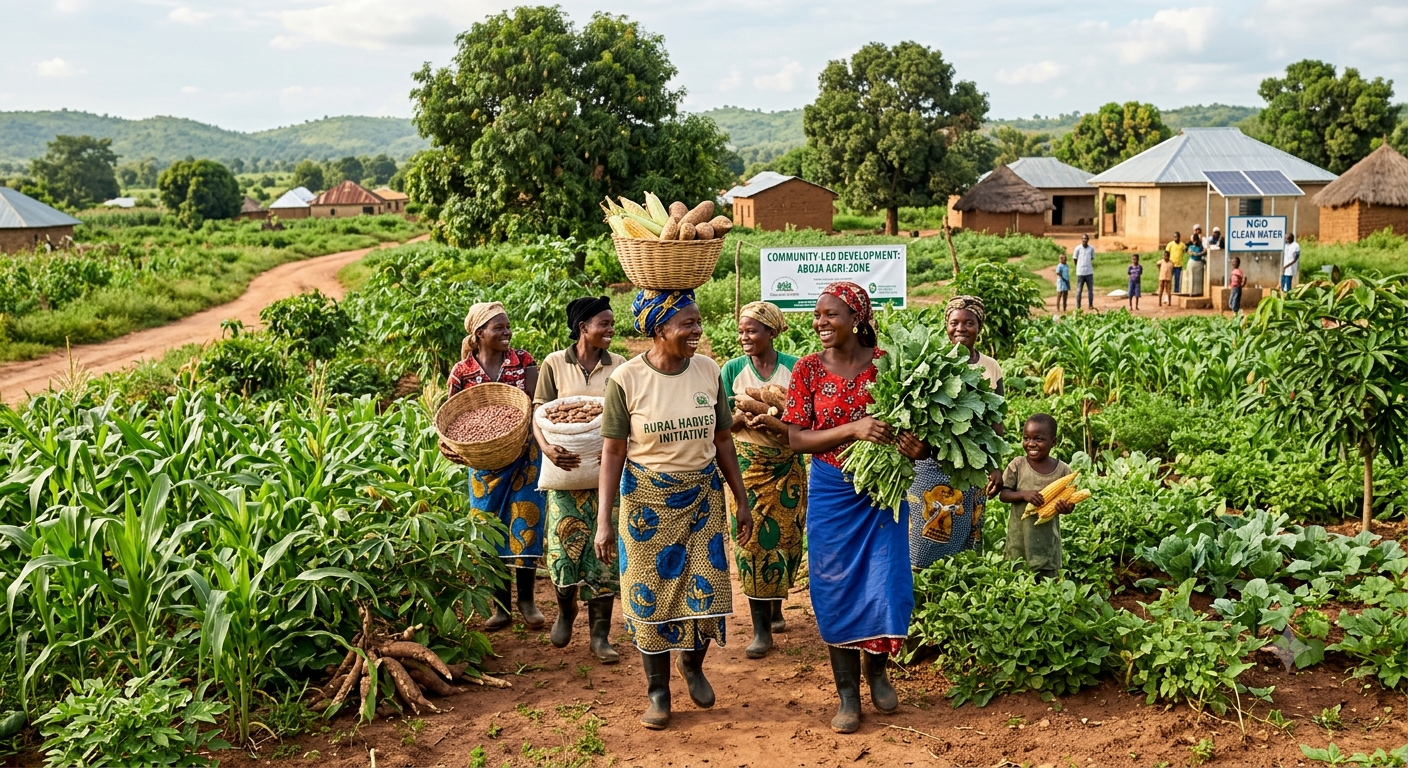
Women are the backbone of rural economies in Nigeria. They cultivate crops, process food, manage households, care for families, and contribute significantly to local markets. Yet despite their vital role, many rural women continue to face barriers that limit their economic potential, including limited access to education, land ownership, financial services, markets, and decision-making opportunities.
Economic empowerment is not only about increasing income—it is about giving women the resources, skills, confidence, and opportunities needed to improve their lives and contribute meaningfully to their communities.
As climate change, economic instability, and social inequalities continue to affect vulnerable populations, empowering rural women has become a critical strategy for achieving sustainable development, reducing poverty, improving food security, and building climate resilience.
This article explores proven models of economic empowerment that are transforming the lives of women across rural Nigeria.
Why Women’s Economic Empowerment Matters
When women earn income and control economic resources, the benefits extend beyond individual households.
Research consistently shows that empowered women are more likely to:
- Invest in their children’s education
- Improve household nutrition
- Access healthcare services
- Support local economic growth
- Build climate resilience within their communities
- Participate in community leadership and decision-making
Empowering women creates a multiplier effect that strengthens families, communities, and local economies.
Image Prompt 1
Prompt:
“Rural Nigerian women confidently working together in a thriving agricultural community, carrying harvested crops and smiling. Vibrant African landscape, sustainable development theme, natural sunlight, realistic documentary photography, high resolution.”
Model 1: Village Savings and Loan Associations (VSLAs)
One of the most successful economic empowerment models across rural Africa is the Village Savings and Loan Association (VSLA).
VSLAs are self-managed groups where members save money regularly and provide small loans to one another.
How It Works
- Members contribute weekly or monthly savings.
- The pooled funds are used to provide loans.
- Interest earned remains within the group.
- Profits are shared among members at the end of a cycle.
Benefits
- Increased access to finance
- Reduced dependence on informal money lenders
- Support for small businesses
- Improved financial literacy
- Enhanced community solidarity
For many rural women who lack access to formal banking services, VSLAs provide a practical pathway to financial independence.
Model 2: Climate-Smart Agriculture for Women Farmers
Women produce a significant proportion of Nigeria’s food, yet they are disproportionately affected by climate change.
Climate-smart agriculture empowers women by increasing productivity while helping them adapt to environmental challenges.
Key Practices Include:
- Improved seed varieties
- Water-efficient farming techniques
- Agroforestry
- Organic soil management
- Integrated pest management
- Sustainable irrigation systems
Impact
- Higher crop yields
- Increased household income
- Improved food security
- Greater resilience to droughts and floods
When women have access to climate-smart technologies and training, entire communities become more resilient.
Image Prompt 2
Prompt:
“Female Nigerian farmer practicing climate-smart agriculture, using drip irrigation and improved crop varieties on a sustainable farm. Green fields, healthy crops, environmental sustainability, professional NGO documentary style photography.”
Model 3: Women’s Agricultural Cooperatives
Agricultural cooperatives help women overcome challenges associated with operating individually.
Through cooperatives, women can:
- Access larger markets
- Purchase farming inputs at lower costs
- Receive agricultural training
- Negotiate better prices for products
- Access credit facilities
Success Factors
Strong cooperatives often provide:
- Leadership development
- Collective bargaining power
- Market information
- Business management support
By working together, women increase both productivity and profitability.
Model 4: Skills Development and Vocational Training
Diversified income sources are essential for reducing vulnerability to economic and climate-related shocks.
Vocational training programs equip women with marketable skills such as:
- Food processing
- Tailoring and fashion design
- Renewable energy installation
- Soap and detergent production
- Handcraft production
- Digital literacy
- Agribusiness management
These skills create opportunities for entrepreneurship and alternative livelihoods.
Benefits
- Increased household income
- Reduced unemployment
- Greater economic resilience
- Improved self-confidence
Image Prompt 3
Prompt:
“Rural Nigerian women participating in vocational skills training, learning tailoring, food processing, and entrepreneurship. Modern training center, empowerment theme, diverse group of women, realistic and inspiring photography.”
Model 5: Access to Digital and Financial Inclusion
Technology is opening new opportunities for women entrepreneurs in rural communities.
Digital inclusion initiatives help women access:
- Mobile banking services
- Digital payments
- Online marketplaces
- Agricultural information
- Weather forecasts
- Business training resources
Why It Matters
Digital tools allow women to:
- Save securely
- Expand market reach
- Access financial services
- Improve business efficiency
As mobile technology becomes more widespread, digital inclusion is emerging as a powerful driver of women’s economic empowerment.
Model 6: Renewable Energy-Based Livelihoods
Access to clean energy can significantly improve women’s economic opportunities.
Renewable energy projects support activities such as:
- Solar-powered irrigation
- Agro-processing enterprises
- Refrigeration for food preservation
- Solar charging businesses
- Small-scale manufacturing
Benefits
- Reduced energy costs
- Increased productivity
- Improved environmental sustainability
- Creation of green jobs
Clean energy solutions help women build sustainable businesses while reducing dependence on fossil fuels.
Image Prompt 4
Prompt:
“Nigerian women entrepreneurs using solar-powered equipment for food processing and small businesses in a rural community. Renewable energy, economic empowerment, climate action, bright and optimistic documentary photography.”
Challenges That Must Still Be Addressed
Despite progress, many barriers continue to hinder women’s economic participation.
These include:
Limited Access to Land
Many women lack ownership rights or secure access to productive land.
Financial Exclusion
Formal financial services remain inaccessible for many rural women.
Gender-Based Inequalities
Social norms often limit women’s participation in leadership and economic decision-making.
Climate Change Impacts
Extreme weather events continue to threaten livelihoods and agricultural productivity.
Addressing these barriers requires coordinated efforts from governments, NGOs, development partners, financial institutions, and community leaders.
The Role of NGOs in Women’s Economic Empowerment
NGOs play a critical role in creating opportunities for rural women through:
- Skills development programs
- Financial literacy training
- Climate-smart agriculture initiatives
- Women’s cooperatives support
- Entrepreneurship development
- Access to clean energy solutions
- Advocacy for gender equality
- Market linkage programs
By investing in women’s empowerment, NGOs help build stronger, more resilient communities capable of adapting to economic and environmental challenges.
What Makes an Empowerment Model Successful?
The most effective programs share several key characteristics:
Community Ownership
Women actively participate in designing and implementing solutions.
Capacity Building
Programs focus on long-term skills and knowledge transfer.
Access to Resources
Women receive the tools, finance, and support needed to succeed.
Climate Resilience
Activities are designed to withstand environmental and economic shocks.
Inclusion
Programs prioritize vulnerable and marginalized groups.
When these elements are combined, empowerment initiatives create lasting and transformative change.
Image Prompt 5
Prompt:
“Group of empowered rural Nigerian women business owners and farmers celebrating success in their community. Diverse ages, confidence, leadership, sustainable livelihoods, climate resilience, professional NGO impact photography.”
Conclusion
Women’s economic empowerment is one of the most effective pathways to reducing poverty, improving food security, strengthening climate resilience, and promoting sustainable development in rural Nigeria.
From Village Savings and Loan Associations and climate-smart agriculture to vocational training, digital inclusion, and renewable energy enterprises, proven models are already transforming lives across the country.
However, achieving lasting impact requires continued investment, partnerships, and a commitment to removing the barriers that prevent women from reaching their full potential.
When rural women thrive, families prosper, communities become more resilient, and sustainable development becomes achievable for all.
The future of rural Nigeria depends on empowering women not just as beneficiaries of development, but as leaders, innovators, entrepreneurs, and agents of change.
Investing in women is investing in a more resilient, equitable, and sustainable future.
