
Young people make up the largest demographic in Nigeria and across much of Africa. Yet, despite their numbers, they remain significantly underrepresented in decision-making processes that shape their future. In governance, climate action, economic planning, and community development, youth voices are often missing where they matter most.
This gap is not just a democratic concern—it is a development challenge, a climate risk, and a missed opportunity for innovation.
Youth participation in governance is essential for building inclusive, resilient, and future-ready societies. When young people are actively involved in decision-making, policies become more responsive, communities become more dynamic, and development outcomes improve significantly.
Why Youth Participation in Governance Matters
Governance is most effective when it reflects the diversity of the population it serves. Youth bring unique perspectives shaped by education, technology, climate awareness, and lived experience.
Key Reasons Youth Voices Matter:
- Young people represent the future of every policy decision made today
- They are highly affected by long-term issues like climate change and unemployment
- They bring innovation, creativity, and digital fluency to governance systems
- They are critical drivers of social change and accountability
- They strengthen democratic legitimacy and civic engagement
Excluding youth from governance creates a disconnect between policy decisions and real-world needs.
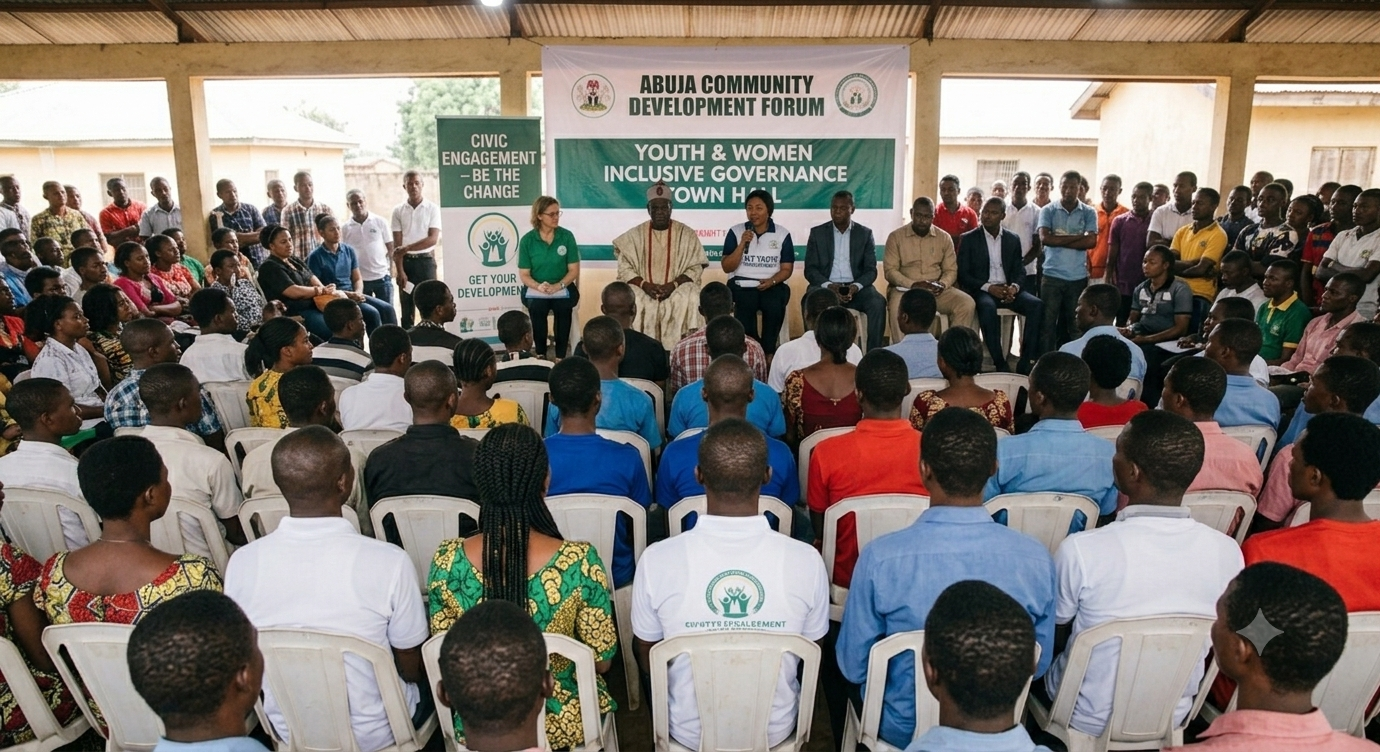
Image Prompt 1
Prompt:
“Young Nigerian men and women actively participating in a community town hall meeting, engaging with local leaders, raising hands to speak, inclusive governance setting, realistic documentary photography, civic engagement theme.”
Youth and Climate Governance: A Critical Link
Climate change is one of the defining challenges of our time, and young people will bear the greatest burden of its impacts.
From flooding in coastal communities to droughts in northern regions, youth are already experiencing the consequences of environmental degradation.
Why Youth Must Be Involved in Climate Governance:
- They will live longest with today’s climate decisions
- They are key innovators in climate-smart solutions
- They are strong advocates for environmental justice
- They mobilize communities faster through digital platforms
Youth participation in climate governance ensures that policies are not only sustainable but also forward-looking.
Barriers to Youth Participation in Governance
Despite their potential, young people face several obstacles in accessing governance spaces.
1. Limited Access to Decision-Making Platforms
Many governance structures are dominated by older generations, leaving little room for youth representation.
2. Lack of Political Inclusion
Youth are often underrepresented in political offices and leadership positions.
3. Economic Constraints
Financial barriers limit youth participation in civic activities and leadership development programs.
4. Weak Civic Education
Many young people are not adequately informed about governance processes or how to engage effectively.
5. Social and Cultural Norms
In some contexts, youth voices are undervalued or dismissed due to age.
Addressing these barriers is essential for building inclusive governance systems.
Image Prompt 2
Prompt:
“Young African activists organizing a climate and governance advocacy campaign, holding banners, digital devices, and speaking to community members, energetic and hopeful atmosphere, realistic documentary style photography.”
The Role of Youth in Strengthening Democracy
Youth participation strengthens democracy in several important ways.
1. Accountability and Transparency
Young people often demand greater accountability from leaders and institutions.
2. Civic Innovation
Youth introduce digital tools and innovative approaches to civic engagement.
3. Voter Participation
Young voters influence electoral outcomes and policy direction.
4. Peacebuilding and Social Cohesion
Youth-led initiatives often promote dialogue, peace, and conflict resolution in communities.
A democracy that excludes its youth risks stagnation and disconnect from reality.
Youth as Drivers of Climate Action and Sustainability
Across Nigeria and globally, young people are leading climate action movements, environmental campaigns, and sustainability initiatives.
Key Contributions Include:
- Tree planting and reforestation projects
- Waste management and recycling initiatives
- Climate education campaigns in schools
- Renewable energy advocacy
- Community resilience programs
Youth-led climate action demonstrates that young people are not just future leaders—they are leaders today.
Image Prompt 3
Prompt:
“Young volunteers planting trees in a rural Nigerian community as part of a climate action project, teamwork, environmental restoration, green landscape, inspirational and realistic photography.”
Digital Technology and Youth Political Engagement
Technology has transformed how youth engage with governance.
Through digital platforms, young people can:
- Advocate for policy change
- Mobilize communities
- Monitor government performance
- Access civic education resources
- Participate in virtual consultations
Social media, mobile apps, and online forums have become powerful tools for civic participation and activism.
Digital inclusion ensures that governance becomes more accessible, transparent, and participatory.
Education and Civic Awareness
Civic education is a foundation for meaningful youth participation.
When young people understand governance systems, they are better equipped to:
- Understand their rights and responsibilities
- Participate in elections
- Engage in policy discussions
- Hold leaders accountable
Schools, NGOs, and community organizations play a key role in building civic knowledge and leadership skills among youth.
Image Prompt 4
Prompt:
“Group of Nigerian students in a classroom learning about civic education and governance, teacher engaging students in discussion, interactive learning environment, realistic educational photography.”
How NGOs Can Strengthen Youth Participation
Non-governmental organizations are critical in bridging the gap between youth and governance systems.
Key Interventions Include:
- Leadership development programs for youth
- Civic education and awareness campaigns
- Youth policy advocacy platforms
- Mentorship and capacity-building initiatives
- Support for youth-led organizations
- Digital engagement and training programs
By empowering young people, NGOs help build a generation of informed, active, and responsible citizens.
Policy Recommendations for Inclusive Youth Governance
To enhance youth participation, governments and institutions should:
- Create youth-inclusive policy frameworks
- Establish youth councils at local and national levels
- Increase youth representation in leadership positions
- Invest in civic education programs
- Support youth entrepreneurship and innovation
- Strengthen access to digital governance platforms
Inclusive governance is not optional—it is essential for sustainable development.
Image Prompt 5
Prompt:
“Young Nigerian leaders sitting at a policy roundtable with government officials, discussing governance and development issues, inclusive decision-making, professional and realistic documentary photography.”
Conclusion
Youth participation in governance is not just about inclusion—it is about building stronger, more resilient, and more innovative societies.
Young people bring energy, creativity, urgency, and a deep stake in the future. When their voices are included in governance systems, policies become more effective, climate action becomes stronger, and democracy becomes more vibrant.
Excluding youth is a missed opportunity. Empowering them is an investment in sustainable development.
For Nigeria and the world, the path to a better future must include young voices at every level of decision-making.
A truly inclusive governance system is one where youth are not just participants—but partners in shaping the future.
